This year the French Ministry of Affairs (insert French sex scandal joke here) announced “a multi-tiered campaign” to encourage the French to be nicer to tourists. Studies had found that, despite France being the most visited country in the world, tourist satisfaction ratings were 30% below the European average. Past attempts to improve tourists’ experience in Paris – including distributing “politeness manuals” to service workers and employing “smile ambassadors” at major tourist attractions – had met with marginal (no?) success.
I have always sort of agreed with the stereotype – i. e. that French people are not as friendly as, say, Italians. But I was willing to give them another chance, as part of this current vacation (and, in honor of my very friendly French heritage mother – who named me Yvonne!).
Here’s my very unscientific and limited view from three trips to France in the past four years: Once I got out of Paris (and other large cities), practiced some basic French customs and tried a little harder to speak (very rudimentary) French, my experience has been overwhelmingly positive. On this trip, we have had a series of delightful encounters with the locals, peppered with smiles, laughter and offers of help. (We did witness one French waiter being super rude to a group of Italian tourists – but that was at a major tourist attraction. Oh and there was that encounter with the guy who ignored me, refusing to make eye contact at the train station near Villefranche Sur Mer on a previous trip. But maybe the exceptions prove the rule??)
We’ve all heard the expression, “when in Rome, do as the Romans do.” That advice does not just apply to Italy, of course, and it does not just dictate that we should drink lots of Chianti. When we travel we are well advised to learn a few local customs and phrases. It shows respect and a willingness to be open to new cultures. (Perhaps then it’s not the French but the tourists who need an attitude campaign?)
Certainly Americans – who have such an immense amount of power in the world, whose leaders and corporations can choose to make the world a better place or add to its misery – should try, and even feel obligated, to understand the rest of the world. Foreigners may greet each other “strangely”, eat different (delicious!) foods and observe odd (to us!) customs. When we take time to appreciate those differences we may find them endearing, even enchanting. And, as we do so, we are humanizing the “other”.
And we will discover that we are not so different after all.
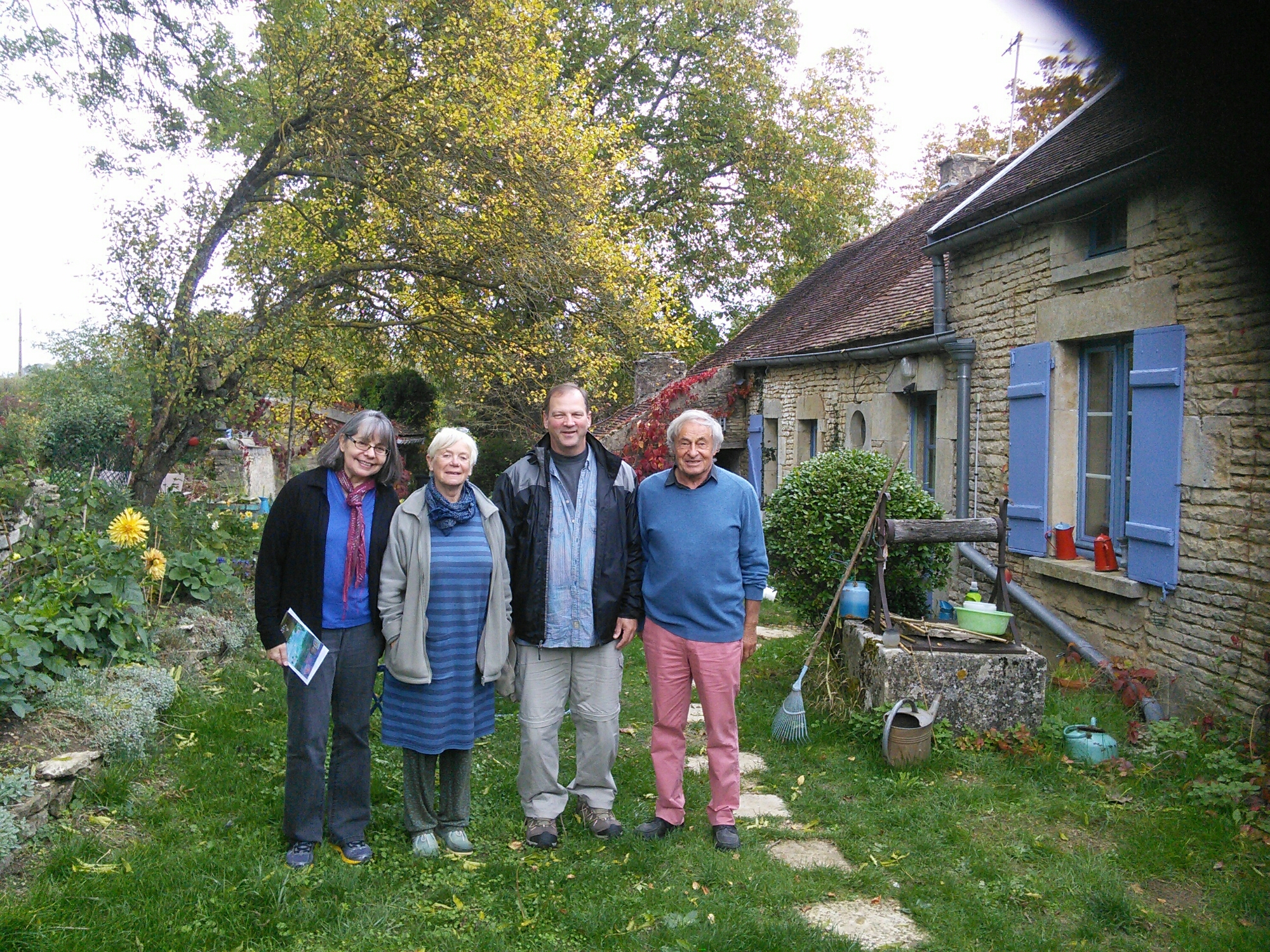
Annie and René didn't speak much English but we felt like friends after our lunch at their farm house in Planay, france
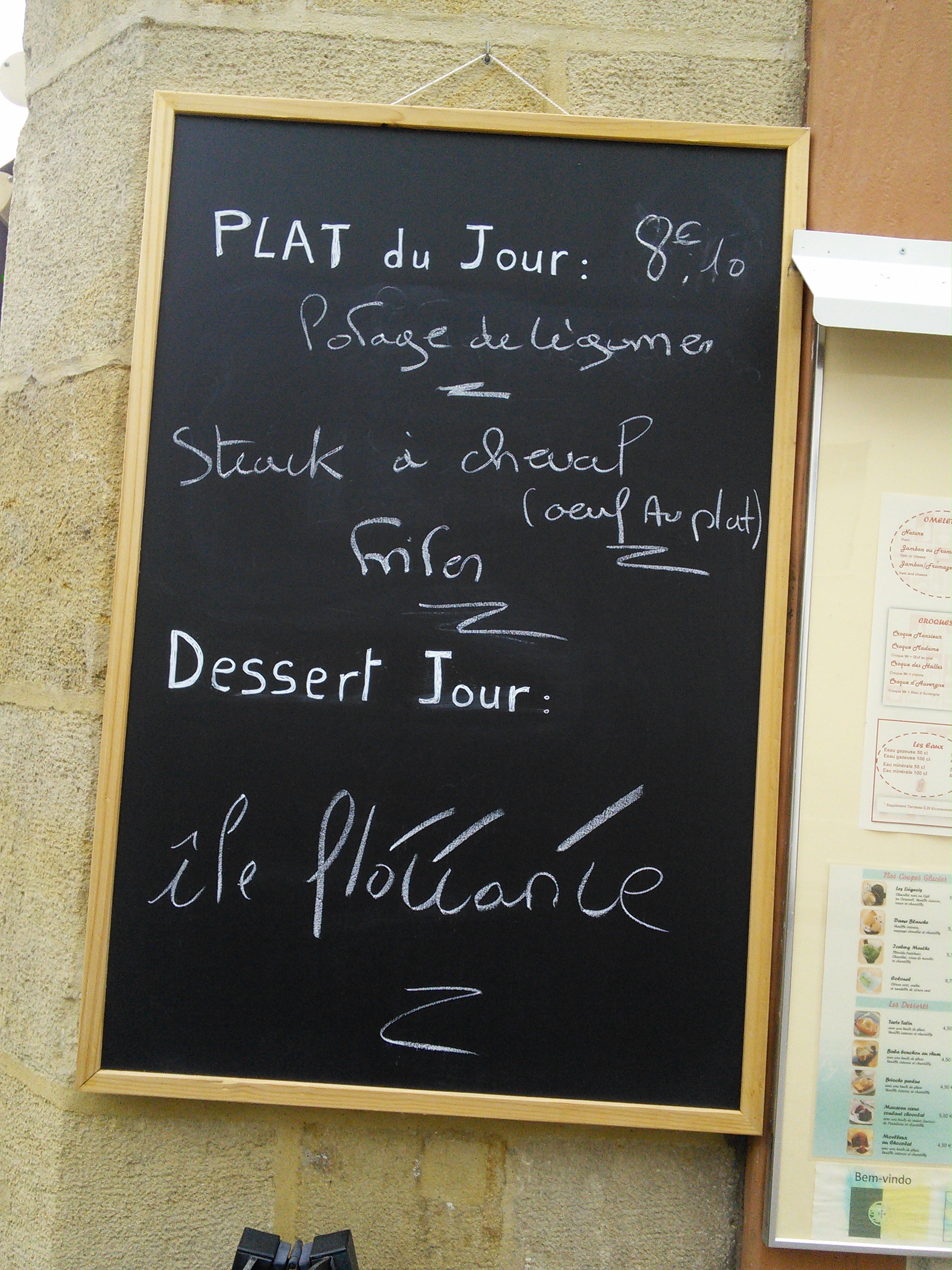
We should have been more open to the plat du jour at this cafe - horse steak ☺;)